


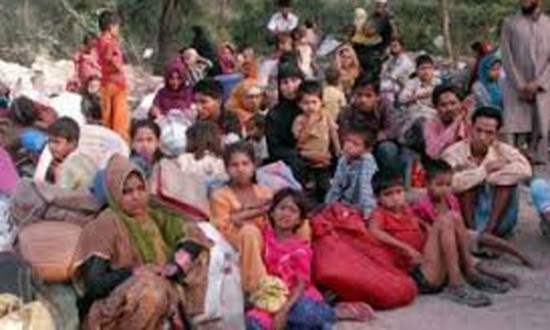
OBNews: The number of Rohingya refugees crossing from Myanmar into Bangladesh has surged, the UN says, with more than 35,000 new arrivals identified in the last 24 hours.
More than 123,000 Rohingya are now said to have fled violence in Myanmar’s Rakhine state since 25 August.
The conflict was triggered by an attack by Rohingya militants on police posts.
This sparked a military counter-offensive that has forced a flood of Rohingya civilians from their villages.
The Rohingya are a stateless mostly Muslim ethnic minority who have faced persecution in Myanmar (also called Burma). Many of those who have fled describe troops and Rakhine Buddhist mobs razing their villages and attacking and killing civilians in a campaign to drive them out.
The military says it is fighting against Rohingya militants who are attacking civilians.
Independently verifying the situation on the ground is very difficult because access is restricted, but since the police-post attacks Rohingya families have been streaming north into Bangladesh.
The UN says it is not clear exactly when the latest refugees arrived, but said the number of new arrivals needing food and shelter had surged dramatically.
Two main UN camps for them are now full, so people are sleeping outside or building shelters on open ground and along roads, a spokeswoman said.
Most people walked 50-60km (31-37 miles) for up to six days to reach safety and are in dire need of food and water, a UN situation report said.
The surge comes amid mounting concern in Muslim nations over the plight of the Rohingya.
“The security authorities need to immediately stop all forms of violence there and provide humanitarian assistance and development aid for the short and long term,” said Indonesia Foreign Minister Retno Marsudi.
Ms Retno met Myanmar’s de facto leader, Aung San Suu Kyi, on Monday and is due in the Bangladeshi capital today.
Indonesia is one of several nations where there have been protests over the issue. Pakistan and Malaysia have spoken out, and the Maldives has suspended trade with Myanmar.
Chechnya and Indian-administered Kashmir have seen protests and Kyrgyzstan has postponed an Asian Cup football qualifier with Myanmar, citing possible protests.
On Monday, a senior UN human rights official said it was time for Ms Suu Kyi to step in to protect the Rohingya.
Ms Suu Kyi, a Nobel Peace laureate who was under house arrest for years for her pro-democracy activism, has yet to comment on the latest violence.
She is under growing pressure to condemn the army’s campaign, but faces both a powerful military and a Burmese public largely hostile to the Rohingya.
On Tuesday Indian Prime Minister Narendra Modi arrives in Myanmar for an official visit, but the extent to which he will raise the issue is unclear.
Last month, his government – which wants to boost economic and military ties with Myanmar – announced plans to deport India’s 40,000 Rohingya refugees, because it says they are illegal migrants.
However, finding a country to accept them will be very hard, because Myanmar does not consider them citizens and Bangladesh, which is already home to hundreds of thousands of displaced Rohingya, takes a similar view.